
An interview with drilling expert and academician Su Yinao
On October 29th, Chu Tian City News (journalist Shao Yang communicator Cheng Fong Bin), the Wuhan University of Technology celebrated the 120th anniversary of the school, the Su Yi Brains and Dust maids returned to celebrate their school, and the same scientist of the Republic’s age interviewed by the journalist of Chu Tian City in the 26th morning at the Hotel where the Suzuke was staying.
In the late sevens of the year, the Suzukes were well-prepared, with a good sense of mind and memory, to answer the questions in a thread-by-segregated manner, and to do their best in the scientific and technical context.
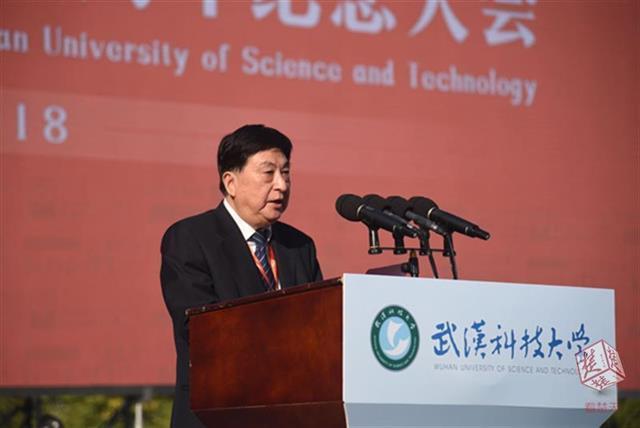
Talker.
Su Yi brain, born in 1949 in Henan Zhui division. Graduated in 1976 from Wuhan Steel College (former to Wuhan University of Technology). Elected member of the Chinese Engineering College in 2003.
More than 20 years ago, oil drilling equipment was considered to be a dead end if it was said that it could be drilled on the basis of “sniffing”. Today, high-end technical equipment in this area has been applied to many of our oil and gas drilling projects.
In the late 1990s, Sioux Yi-Kui led the research team, which had developed its own “geologically-directed drilling technology” over eight years, capable of “reporting” wells from thousands of metres below, automatically discovering the location of the reservoir, and was hailed as the “two-shot one-star” of the Chinese drilling industry.
Quaker: The progressive development of the times is exciting
Chu (Crutian Metropolitan newspaper): How does it feel to see the school of the mother?
Su (Siowi): After 42 years of university graduation, the first 20 years have been relatively low, and since 2003 more have been brought back since the school ‘ s 105th anniversary. I’m sure I’ll go back to school. I had my last year in a five-storey main school building built in the Qingshan campus in 1975, the highest building in the school at the time; By the time we get back, the entire school complex has changed completely, and the lake is a new place. On the other hand, schools are developing and are now well-doing, and I am particularly pleased to see new changes in the primary school.
Studying: My father said I was a student since I was a kid.
You went to college at 24, and you were a member of the Chinese Engineering College at 54, can you tell me about your studies? Does it have anything to do with your family’s growing up?
SU: My father was a town doctor and, as he moved to work, I was transferred to eight primary schools, but every time I went to school, I was able to pass first place without any effort. My parents wanted to train me to study medicine in the future, but I was affected by the country of technology at the time, and I was thinking about national defence and scientific research.
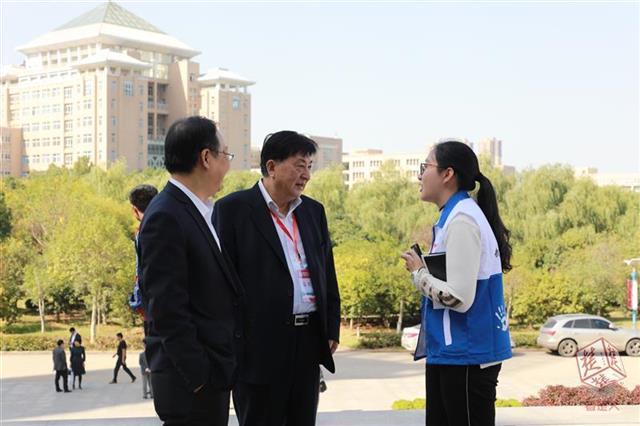
Chu: You were the schoolboy we were talking about.
Su: Remember I had a test at the second grade, I had a full score at the first seven doors, and I had full confidence in the last one, and the result was that all the answers were right, but only 99, and I felt so sorry.
Chu: Why?
Su: The teacher said I wrote the slush, and then I took a point, and then he knew that my father was afraid that I would be proud and that he would beat me. I’m not going to be able to understand their suffering until I’m older.
Chu: You were not frustrated in your studies?
Su: When I graduated 15-year-old junior high school, I was admitted to the province ‘ s main high school, Chengzhou I, with the first grade from the county of Zheng Zheng Zheng Zheng, where I was well educated, and when I was studying in the county, I did not take foreign language classes because of difficulties, until the last year of lower secondary school. In high school, all the students had been studying Russian for three years, with the exception of me.
CHUNG: What is the result of fear?
S: Yes, the teacher asked a very simple question at the time, but I couldn’t answer it, and I felt as if I had not been able to see the eyes of my class, which were brushed and cast into doubt. That’s why he explained to my classmates that I only learned Russian for a year, and I want you to help me.
Chu: How did you pursue him after the teacher who was indeed kind?
S: Language learning does not require a strong system and logic, as is the case in science and technology, but it requires a lot of memory, accumulation and proficiency. I have analysed my strengths, and other courses have a better base and have no effort to spend the time saved on foreign language studies. After two months of mid-level examinations in my Russian language class, I scored 98 points, and I finally got to the top of the first grade in my second grade.
Chu: You’re still a high-intelligence student.
Su: Don’t dare say he’s a master, but say the right way. This has given me inspiration and confidence, and I am not afraid of frustration.
Remembering work: learning to be an electrician while he’s doing his work.
Chu: In 1968, as the first knowledgeable youth to go to the country, did you continue to study at work?
S: Before I left Chengzhou, my class teacher in mathematics gave me a course on “The Analysis of Geometrics and Micronutrients,” saying that after I was out of the country, don’t forget to study. After all these years, I still remember what Teacher Jiang was looking forward to. In the countryside, I became a farmer from a student to a farmer, who came in the wind and worked hard every day, but every day I didn’t work in the rain or at night, I looked for a book.
CHUNG: In the circumstances, is the hobby supporting your studies?
Su: A year later, I was recommended as an electrician by village officials and the public. I didn’t know how to communicate, so I had to study my own books, and I used them for re-learning. From buying the first pole to getting electricity, to setting up a mill for flour, cotton and so on in the village, I’m doing my own work. I often feel that I have insufficient knowledge to do my work, and I borrowed my brother-in-law’s books from 1966 university graduates in mechanics, and I have learned my own mechanics.
Chu: And that’s all the knowledge that came into play?
SU: In 1971, I was recruited to the three canyons of the Chemical Mine Machinery Plant of the Ministry of Chemical Industry, and became a worker. And the next day, I started drawing mechanical drawings, and at that time I still liked to ask a few more questions about why, and I liked to figure out the principles in it, so I also did technological innovation in the factory. In 1973, the university opened up and asked for a cultural examination, which I was recommended by the factory, before entering the school at Wuhan Steel College.
Learn: “Why” to wonder about unknowns
You must appreciate the hard-won time of your studies.
SU: When I went to college, I was a mine mechanic. Because of my previous experiences in the countryside and factories, I’ve had some knowledge base and practical experience at school, and I’ve always learned with problems. Remember, I spent my college life basically following the graduate model.
Chu: Any impressive research experience?
Su: At the end of the first year of school, I was thinking in depth about a mathematical subject, not only doing a full analysis with my own higher mathematics knowledge, but also quickly accessing the sports, kinetics and professional mechanics courses that would have to be studied in the second and third grades, which would have been in the library for seven days, and would have resulted in 50 pages of research notes, and new conclusions. In second year, I promoted the Koenig theorem in Theoretical Mechanicals, and I received expert recognition. It can be said that these self-adding, self-searching problems and the search for solutions have provided me with a more solid basis for my future research work and have benefited me for life.
Oil: scientific research into productivity
Chu: How can you be an expert in the field of oil because you are a miner and mechanic?
Su: Three years after graduating from university to work, in 1979 I took the first post-graduate examination at the Scientific Research Institute for Petroleum Exploration and Development of the Ministry of Petroleum and began to associate with oil.
Chu: Are you still studying like Sanchiro?
SU: At the time, our graduate studies were on a time-based basis, with 900 hours, usually between 10 and 12, and I studied 1702 hours and 21 classes; Master’s dissertation, one required, and I completed two degree papers to submit my defence.
Chu: You went back to Beijing after a while at work?
Su: In 1984, when the Ministry of Oil was approved as a doctorate, I became the first doctorate student to be followed by Professor Paekaka, the then oil authority, on the subject of the seven-and-a-five national priority science and technology project. In 1988, I consciously selected Beijing University of Aeronautics and Astronautics for postdoctoral research, during which I proposed a new area and direction for research on “underground control engineering”.
Chu: Why did you think “to the sky” when you were in oil drilling?
SU: I was thinking about underground control when I was a doctor, and I thought that if control accuracy was to be further enhanced, there was a need for a different path. I studied Mr. Chan’s Engineering Controls, and I wanted to introduce the idea of aerospace control into the orbit control of oil drilling. Such an introduction can only be conceptual, because there is, after all, a great difference between grounding and heaven, but the science is the same.
Chu: Then it proved that your idea worked. The results of your campaign as a leading researcher on the “Profit-level-Drilling-Technology Set” have been awarded the first prize for national scientific and technological progress, and now a huge industry, from which you have personally reaped?
SU: I am already glad that I can do something for the country and turn science and technology into concrete productivity.
Chu: We call him a cross-border “slashing youth” like you, with a multidisciplinary background, which would be better and more likely to succeed.
I don’t understand the term “youth slash.” The cross-cutting of disciplines tends to produce big ideas, to generate groundbreaking big thinking, to see problems from several different perspectives, and then to solve them. There are many opportunities and temptations for young people today, unlike the education we received in that year, when two bullets from Tang-Yon Dune, who were the first to make an important contribution to the atomic bomb and the hydrogen bomb, received a bonus of $20. The best thing to do is to translate results into productivity and really do what the country can.